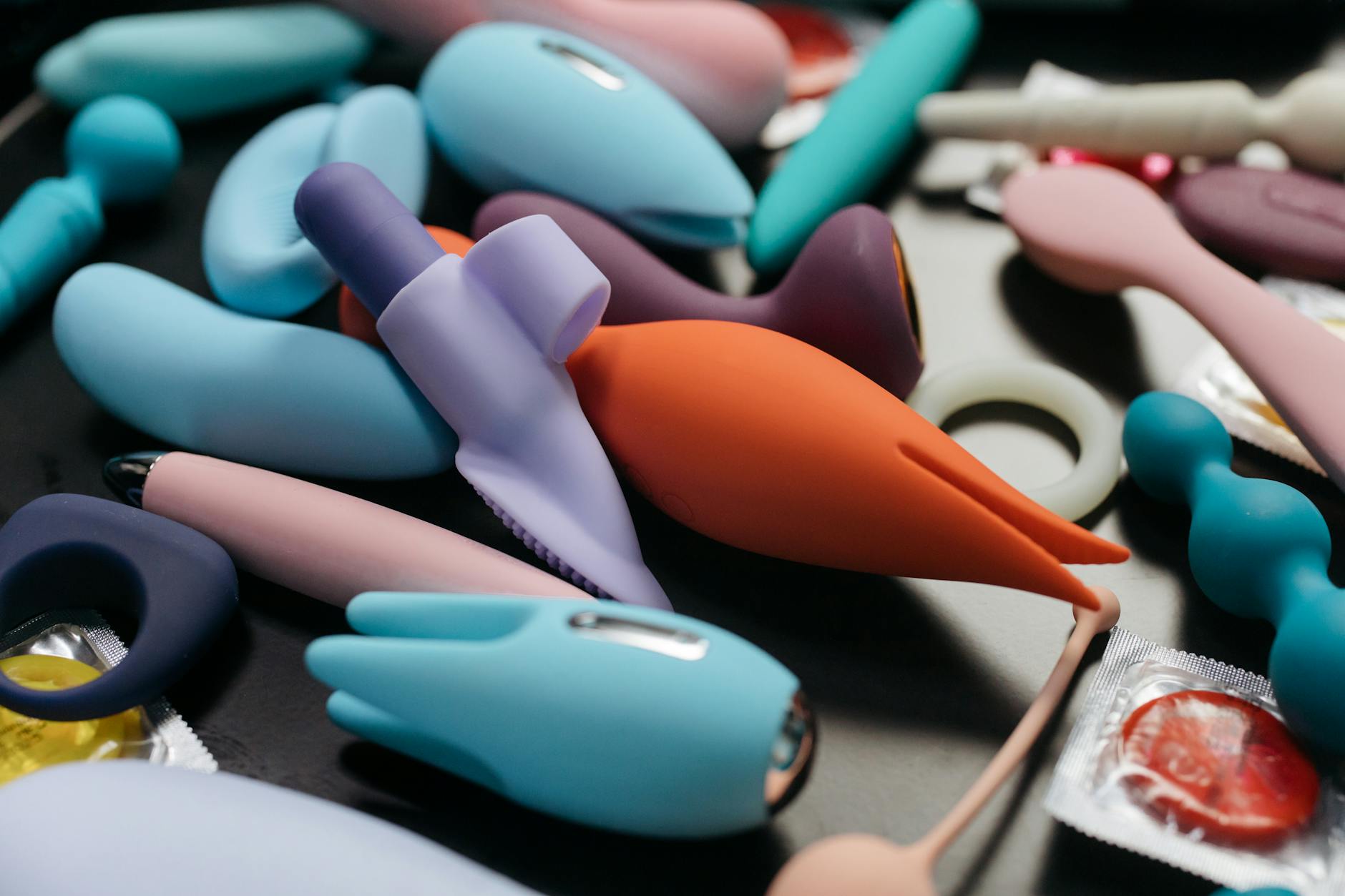
Here's the thing nobody mentions about your cycle and sensation
Your clitoris is not a static target. During the follicular phase (the two weeks after your period starts), your tissue is plump with estrogen, blood flow increases, and sensation builds. By the luteal phase (after ovulation), progesterone kicks in, tissue thins slightly, and what felt intensely pleasurable at day 14 might feel overwhelming or underwhelming at day 24. This isn't broken. This is your body working.
Most people assume their sensitivity is flat across the month. Then they try the same lemon vibrator setting on day 10 that they used on day 25 and feel confused why the experience is wildly different. The vibrator didn't change. Your nervous system did.
The follicular window: when sensation is most responsive
Days 1 through roughly day 14 after your period starts, estrogen is climbing. Your clitoris gets thicker, more engorged with blood, and more densely innervated. This is when most people find they can handle higher intensity settings on their lemon vibrator or clitoral vibrators in general.
During this window, your clitoris is forgiving. You can jump straight to patterns 4 or 5 on the Lem without building up from pattern 1. Arousal builds faster. Orgasms often come quicker. If you've been frustrated by how long pleasure usually takes, the follicular phase is when you might finally get that experience of immediate response.
This is also when lubrication is at its peak. Water-based lube feels luxurious rather than necessary. Some people skip it entirely during this phase. Your body is doing a lot of the work for you.
The strategy: use this window to explore higher intensities. Test patterns you normally find too strong. Try longer sessions. Your tissue has cushion right now. You can experiment without discomfort.
The ovulation peak: maximum sensitivity and a narrow window
Right around ovulation (typically day 14, but this varies wildly), something strange happens. Sensation reaches maximum, but it's also most fragile. The tissue is at its most engorged. The nervous system is at peak responsiveness. But this window lasts roughly 24 to 48 hours.
People often report that their most intense, fastest orgasms happen during ovulation. The lemon vibrator setting that felt right yesterday might feel overwhelming today. This is where a toy with adjustable patterns becomes essential. You might need to drop from pattern 5 to pattern 2 just because your body is already halfway there.
Here's what actually helps: know it's coming. If you track your cycle (even roughly), mark ovulation on your calendar. When that day arrives, plan for a longer warm-up with lower intensity. Your nervous system is primed. You don't need to prove anything by going hard right away.
Many people describe ovulation as a time when they can orgasm multiple times, or when orgasms feel particularly deep or full-body. This is real. It's also temporary. Enjoy it. Then the cycle shifts again.
The luteal phase: when intensity needs adjustment
After ovulation, progesterone rises and everything changes. Days 15 through 28, the clitoral tissue starts to thin slightly. Blood flow decreases a little. Sensation becomes less responsive. What felt perfect on day 14 now feels muted or potentially irritating.
This is when people often abandon their lemon vibrator or clitoral vibrator thinking something is wrong. Nothing is wrong. Your hormone landscape shifted. The tissue needs different input.
Strategy one: increase intensity gradually. Start at pattern 2 or 3 instead of jumping to where you were two weeks ago. Build slowly. Your nervous system needs more time and input to reach the same threshold.
Strategy two: lengthen your warm-up. During the luteal phase, foreplay matters more. Spend 20 to 30 minutes on non-genital touch before you even reach for your lemon vibrator. This primes your nervous system and wakes up the tissue.
Strategy three: experiment with pattern rather than intensity. Some patterns on the Lem feel better than others during this phase. Pattern 1 might feel boring, but pattern 3 with its rhythmic pulses might hit differently. Explore. There's no rule that says you have to use the same pattern all month.
Why lubrication becomes crucial in the luteal phase
Remember how you skipped lube during ovulation? Forget that during days 15 through 28. Progesterone suppresses cervical mucus and also affects the tissue's natural lubrication response. This doesn't mean anything is wrong with you or your lemon vibrator. It means your body is signaling a different kind of care.
Use water-based lube generously. Reapply mid-session. This isn't about making sex happen. It's about protecting tissue that's naturally drier and making sure the stimulation feels good rather than abraded.
Many people report that adding extra lubrication during the luteal phase actually makes orgasm more accessible, not less. The reduced friction means sensation is cleaner. Your nervous system isn't being distracted by physical discomfort.
Tracking what actually happens in your body
Here's where most advice fails: it assumes your cycle follows the textbook 28-day pattern. Yours might be 24 days or 35 days. Your follicular phase might be long, your luteal phase short, or vice versa. Ovulation might not be clearly marked by a single day.
The only way to know is to track it. Not obsessively. Just note: when did my period start? When did I ovulate (you'll feel a shift in cervical mucus, sometimes a small pain, sometimes a surge in desire)? When did my period start again? Do this for two or three cycles.
Once you know your actual pattern, you can map it onto the advice above. Days 1 through 15 might be your follicular window. Days 16 through 30 your luteal phase. Or it might be 1 through 18 and 19 through 26. Your body doesn't care about the calendar.
Then, adjust your lemon vibrator approach accordingly. High intensity early cycle. Adjusted technique, extra lube, longer warm-up late cycle. This is how you work with your body instead of fighting it.
What happens if you use birth control or don't menstruate
Hormonal birth control flattens the cycle entirely. Your estrogen and progesterone don't surge and drop. This means your clitoral sensitivity might stay relatively consistent month to month.
For some people, this is freedom. No surprise dips in sensation. No cycle tracking needed. The tradeoff: that ovulation peak of maximum sensitivity might be gone too.
If you have a IUD without hormones, you'll still cycle. If you have a hormonal IUD, the hormones are localized to the uterus, so you might still feel some cycle effects, just muted.
The point: your lemon vibrator experience isn't broken if your body doesn't cycle. You might just not need to adjust patterns as frequently. Some people find they can go harder more consistently. Others find they need more warm-up time across the board. Experiment. Your body will tell you what works.
Building a rotation of settings and techniques
Stop thinking of your lemon vibrator as one experience. Think of it as a tool with multiple modes. You have pattern 1 through 5 (or however many your device has). You have variable intensity on each pattern. You have the option to use it with a partner or solo. You have the option to apply it directly or through lighter contact.
During your follicular phase, you might use patterns 4 to 5 at high intensity, direct contact, minimal lube. During ovulation, pattern 2 or 3 at moderate intensity, light contact. During your luteal phase, patterns 1 to 3 at moderate intensity with maximum lube and extended warm-up.
This isn't complicated. This is how you actually use a device like the Lem over a month. You adjust. You respond to what your body is telling you. You don't pretend it's the same experience every day.
When inconsistent sensation signals something else
There's a difference between cycle-related sensation changes (which are predictable and rhythm-based) and erratic, unexpected numbness or hypersensitivity that doesn't follow a pattern.
If your sensation shifts randomly, doesn't map to your cycle, or feels painful rather than just different, that's worth checking with a doctor. Changes in medication, stress, diabetes, or pelvic floor issues can all affect sensation in ways that aren't cycle-related.
But if you're noticing a rhythm? If high intensity feels great mid-cycle and irritating late cycle? If you're needing longer warm-up some weeks and quick peaks others? That's not a problem. That's you learning your body. That's you using your lemon vibrator intelligently.
FAQ: Cycle-related sensation and lemon vibrators
How do I know if what I'm feeling is a real sensation change or just my imagination?
If you're noticing a repeating pattern that maps to your cycle, it's real. Hormones affect tissue thickness, blood flow, and nervous system sensitivity. Document it. Note the date, the pattern on your lemon vibrator you used, how it felt, and where you were in your cycle. After two or three months, you'll see the pattern. That's not imagination. That's data.
Can I use my lemon vibrator daily during my cycle without damaging tissue?
Yes, as long as you're not experiencing pain. Stimulation doesn't wear out the clitoris. What matters is: are you using adequate lubrication? Are you stopping if there's discomfort? Are you letting tissue recover if you're going at high intensity multiple days in a row? Daily use is fine. Daily use with poor technique or inadequate lube can cause temporary irritation, not permanent damage.
My cycle is irregular. How do I know when to adjust my lemon vibrator settings?
Track ovulation instead of relying on day count. Ovulation is marked by a shift in cervical mucus (it becomes clear and stretchy), sometimes mild pain, and a surge in desire. Once you know roughly when that happens, you know when the luteal phase begins. The phase before ovulation is your follicular window. The phase after is your luteal phase. Adjust accordingly.
Does using lemon clitoral vibrators affect my cycle length or regularity?
No. Vibrators do not change hormones or cycle length. They stimulate nerves and tissue. That's it. If your cycle is changing, it's not because of toy use. It might be stress, diet, exercise, age, medication, or other hormonal factors. The vibrator is not the cause.
I feel numb during my luteal phase even with extended warm-up. Is something wrong?
Luteai-phase sensation changes can be subtle, but if you're feeling completely numb, a few things to check: Are you using adequate lube? Sometimes luteal-phase dryness is so pronounced that friction overrides sensation. Are you stressed? Stress flattens sensation across the cycle. Have you changed medications? Some medications affect sensitivity. If none of those apply, it's worth a conversation with a doctor, because significant numbness isn't typical even for the luteal phase.
Can I use the same lemon vibrator setting regardless of where I am in my cycle?
Technically yes, if you adjust other variables. If you stick to pattern 2 at low intensity, you might be fine all month. But you're leaving pleasure on the table during your follicular phase. A smarter approach: use what works for each phase. Your lemon vibrator has patterns and intensity settings for a reason. Use them.
The real insight: consistency isn't flat
Most people chase a single "perfect" experience and feel disappointed when it doesn't show up every time. Consistency doesn't mean sameness. It means reliability. Your body reliably shifts through the cycle. Your lemon vibrator reliably has the range to meet each phase where it is. That's the real consistency worth chasing.
Understand your cycle. Adjust your approach. Let your body surprise you with what it's capable of depending on the week. That's not a problem to solve. That's pleasure actually working.
If you're struggling to find the right fit for your body, reach out. Or explore how other people are adjusting their techniques when sensitivity changes with age.