Let's talk about what actually happens to your body
Your 40s aren't a pleasure deadline. They're a recalibration. Between you and me, most of what you've heard about sensitivity in midlife falls into two equally unhelpful camps: either "you're fine, nothing changes" or "everything dries up and gets numb." Both are incomplete. Here's what the research and clinical experience actually show.
The biology of clitoral sensitivity after 40
Estrogen and testosterone both decline gradually starting around age 35, with a more noticeable shift in your 40s. This affects tissue thickness and hydration around the clitoris, which can change how quickly you respond to direct stimulation. Some people describe it as needing more time to warm up. Others notice that the same intensity they enjoyed at 30 feels either too sharp or oddly muted.
That's not your clitoris dying. That's your clitoris adapting.
The nerve density doesn't change. The capacity for orgasm doesn't disappear. What shifts is the pathway there. Your body is asking for a different approach, not asking you to give up.
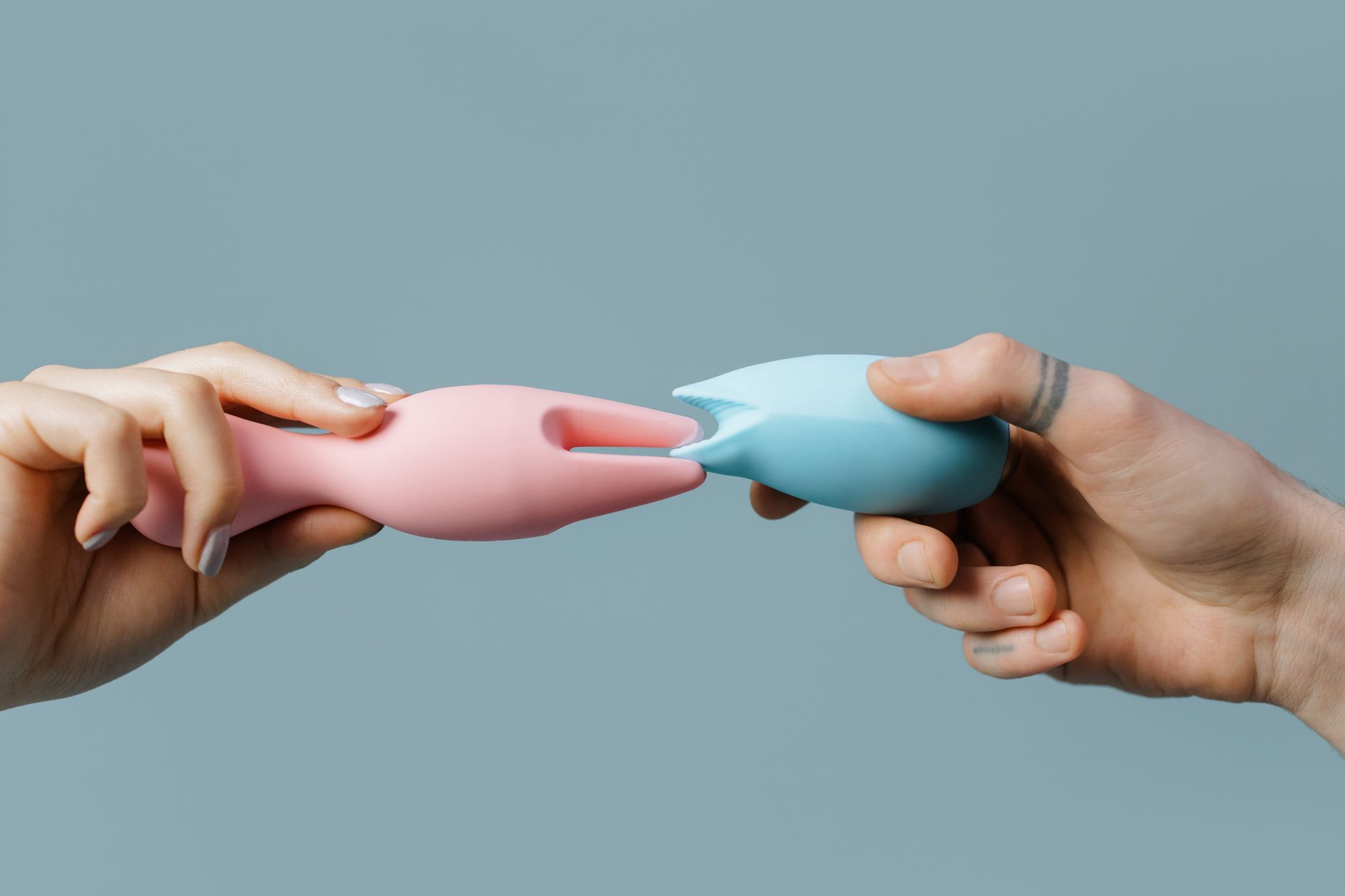
This is where tools like the lemon clitoral vibrator become unexpectedly valuable. Air-suction technology, which lemon vibrators use, works differently than traditional vibration. Instead of relying on rapid oscillation (which can feel raw or overstimulating on sensitive tissue), suction gently expands and releases around the clitoris. Many people in their 40s and beyond report that this feels more satisfying, more buildable, and easier to control than what they used before.
Why sensitivity changes feel confusing in your 40s
Three layers are at work, and they're easy to confuse:
The physical layer. Hormone shifts thin tissue and reduce natural lubrication. This is measurable and normal.
The psychological layer. You've spent two decades learning what works. Now it doesn't. That's disorienting, and it can feel like a personal failure instead of a biological fact.
The relational layer. If you're with a partner, their response to the change matters. Awkward conversations about "it's taking longer" can trigger shame or avoidance, and that becomes a separate problem layered on top of the physical one.
Separating these three makes everything easier. The physical part you can solve with better tools and longer warm-up time. The psychological part improves when you stop seeing the change as loss. The relational part needs honest communication about what you want, not apologizing for what your body needs now.
A lemon clitoral vibrator helps primarily with the first layer, but it indirectly helps with the other two because it delivers consistent, enjoyable sensation without the mental math of "is this working or am I broken."
How lemon vibrators match your changing sensitivity
Here's what makes them different from traditional vibrators.
Traditional vibrators rely on frequency. You apply them directly to the clitoris and the motors buzz. That works beautifully when you're 25 and your tissue is thick and responsive. In your 40s, when sensitivity has recalibrated, the same frequency can feel like static or needless intensity.
Lemon vibrators, including air-suction clitoral vibrators like the Lem, work by creating gentle waves of pressure and release. You position them over the clitoris and they form a seal, then pulse air in and out. The sensation builds more gradually. You control how much pressure by adjusting the pattern or intensity level.
The result: less guessing, more pleasure. Because the stimulation is broader (not laser-focused on one millimeter), it tends to feel less harsh on tissue that's more delicate now. And because the sensation comes from waves rather than vibration, it actually reads as stronger to many people, even at lower settings.
This matters in practical terms. When you're 25, stronger might mean "higher vibration speed." When you're 45, stronger might mean "a fuller sensation that doesn't feel jagged."
The timeline: when to expect changes, and when to reach for help
Sensitivity doesn't flip overnight. Most people notice a gradual shift starting in the early to mid-40s. Some signs to watch for.
You need longer warm-up time before you feel anything. Ten minutes used to be enough; now it's 20 or 30. That's not abnormal. That's your body asking for more foreplay.
Direct pressure feels uncomfortable in ways it didn't before. A vibrator that felt good at 30 now feels too intense or too sharp. This is a cue to switch tools or switch settings, not to stop trying.
Orgasms are shallower or feel distant. They're still happening, but they feel muted or less intense. This often responds beautifully to tools designed for your forties body, like lemon clitoral vibrators.
If you're noticing these things and they've been consistent for a few weeks, that's your cue to experiment. If pain appears, or if sensation completely vanishes, talk to a doctor. There are topical and systemic treatments that work well. But mild shifts in sensation and responsiveness? That's biology, not pathology. That calls for strategy, not intervention.
The practical adjustments that work
Four things make a real difference when sensitivity shifts.
Invest in the right tool. A lemon clitoral vibrator or lemon sucker (the colloquial term for air-suction devices) is worth trying. They're designed for tissue that needs a different approach. Many people who've used traditional vibrators for years find that lemon vibrators feel like discovering pleasure all over again.
Add more lube. Not because you're broken, but because thinner tissue benefits from it. Water-based lubricants warm with your skin and add glide. You're not "making up" for dryness; you're creating the conditions your body needs to feel good.
Build in ritual time. If you used to have 10-minute orgasms on demand, that's no longer the contract. Set 45 minutes aside. Light a candle. Put your phone away. Make it a date with yourself, not a task to accomplish. The mental shift alone often makes sensitivity changes feel less like loss and more like permission to slow down.
Experiment with patterns over intensity. With tools like the Lem vibrator, don't jump straight to the highest setting. Start on pattern 1 or 2. Your clitoris will tell you if it wants more intensity. This takes the pressure off and makes exploration feel playful instead of desperate.
How to talk to a partner about sensitivity changes
If you're in a relationship, this conversation is worth having cleanly and early.
Don't frame it as "my body is broken" or apologize. Frame it as "my body has changed and here's what feels good now." That's information, not failure.
Show them what you like. If a lemon vibrator helps, use it during partnered sex. This normalizes it and also gives your partner concrete feedback about your pleasure. They're not guessing; they're participating.
Separate the conversation from performance. "I need more time to orgasm" is different from "I'm not attracted to you." Say both things clearly if both are true, but don't let one excuse the other.
Many partners feel relieved when this gets addressed. They've probably noticed the change and weren't sure how to bring it up. Naming it removes the elephant.
When to see a specialist
Sensitivity changes in your 40s are normal. Persistent pain, complete numbness, or sudden shifts warrant a checkup.
A doctor trained in sexual health can rule out underlying hormonal issues or medication side effects. They can also prescribe topical estrogen if dryness is severe. Most people see significant improvement within weeks.
If you're on antidepressants, some can affect sensitivity. That's worth discussing with your prescriber. Dosage shifts or medication changes sometimes help.
If you've had surgery (fibroid removal, hysterectomy, etc.), scar tissue can affect sensation. Physical therapy focusing on the pelvic floor often helps.
But in most cases, your sensitivity shift is exactly what it appears to be: your body changing, and needing different tools to feel good. That's not a crisis. That's information.
Why this matters for your 40s and beyond
Your forties are often the first time in your life that you're allowed to prioritize your own pleasure fully. No fertility pressure. No "am I ovulating" tracking. No performing for someone else's timeline. Your body has changed, and so have you. The combination can actually make pleasure richer than it was before.
Lemon vibrators and other clitoral vibrators designed for sensitive tissue make that exploration easier. You're not fighting your body. You're working with it. When you stop expecting your 40-something body to behave like your 20-something body and instead ask "what does this body actually enjoy," pleasure often gets better, not worse.
The shift isn't an ending. It's a chance to relearn your own pleasure on your terms.
People also ask
Why do lemon clitoral vibrators feel different than regular vibrators?
Lemon vibrators and air-suction toys use pressure waves instead of rapid vibration. That creates a fuller, broader sensation that many people find more satisfying, especially if direct vibration feels too intense or sharp. The sensation builds more gradually, which also gives you better control and makes it easier to reach orgasm without feeling overstimulated.
Can I still orgasm in my 40s if my sensitivity has changed?
Completely. Sensation changes, but orgasm capacity doesn't disappear. You may need more time, different stimulation, or a new tool like a lemon sucker, but the ability is still there. Many people report that orgasms in their 40s feel different but equally satisfying, sometimes more so because the buildup is slower and more controlled.
Is vaginal dryness the same as sensitivity loss?
No. Dryness is about lubrication; sensitivity is about how your clitoris responds to touch. They're related (thinner tissue from lower estrogen affects both), but they're not identical. Dryness responds to lubricant. Sensitivity changes respond to different tools and longer warm-up time. You may need both solutions.
How long does it take to get used to a lemon vibrator if I've only used traditional vibrators?
Most people adjust within 2-3 sessions. The sensation is different, so your first experience might feel unfamiliar. Start on a lower setting or pattern and give your body time to learn what feels good. By the third or fourth use, most people find a rhythm they enjoy.
Should I tell my partner about sensitivity changes?
Yes. Communication removes shame and gives your partner information instead of leaving them guessing. You don't need to make it heavy. "My body's changed a bit, here's what feels good now" is enough. Showing them (with a tool or by guiding their hand) is often easier than explaining.
Is lower sensitivity in your 40s a sign of hormonal issues?
Not always. Mild sensitivity shifts are normal during hormonal changes in your 40s. But if sensitivity vanishes suddenly, or if you also have other symptoms (irregular periods, night sweats, mood changes), it's worth getting bloodwork. Hormonal testing can rule out thyroid issues or other imbalances. But in most cases, the sensitivity shift is simply part of midlife biology.
Your pleasure matters in your 40s and beyond
You've spent decades learning your body. Your 40s aren't the time to stop. They're the time to learn it again, on new terms. Lemon vibrators and similar tools designed for tissue that's changed make that exploration easier, more pleasurable, and more grounded in what your actual body enjoys now.
Sensitivity doesn't have to be a loss. It can be a beginning.
Ready to explore? Reach out to our team at Hello Nancy if you have questions about finding the right tool for your body. We're here to help.