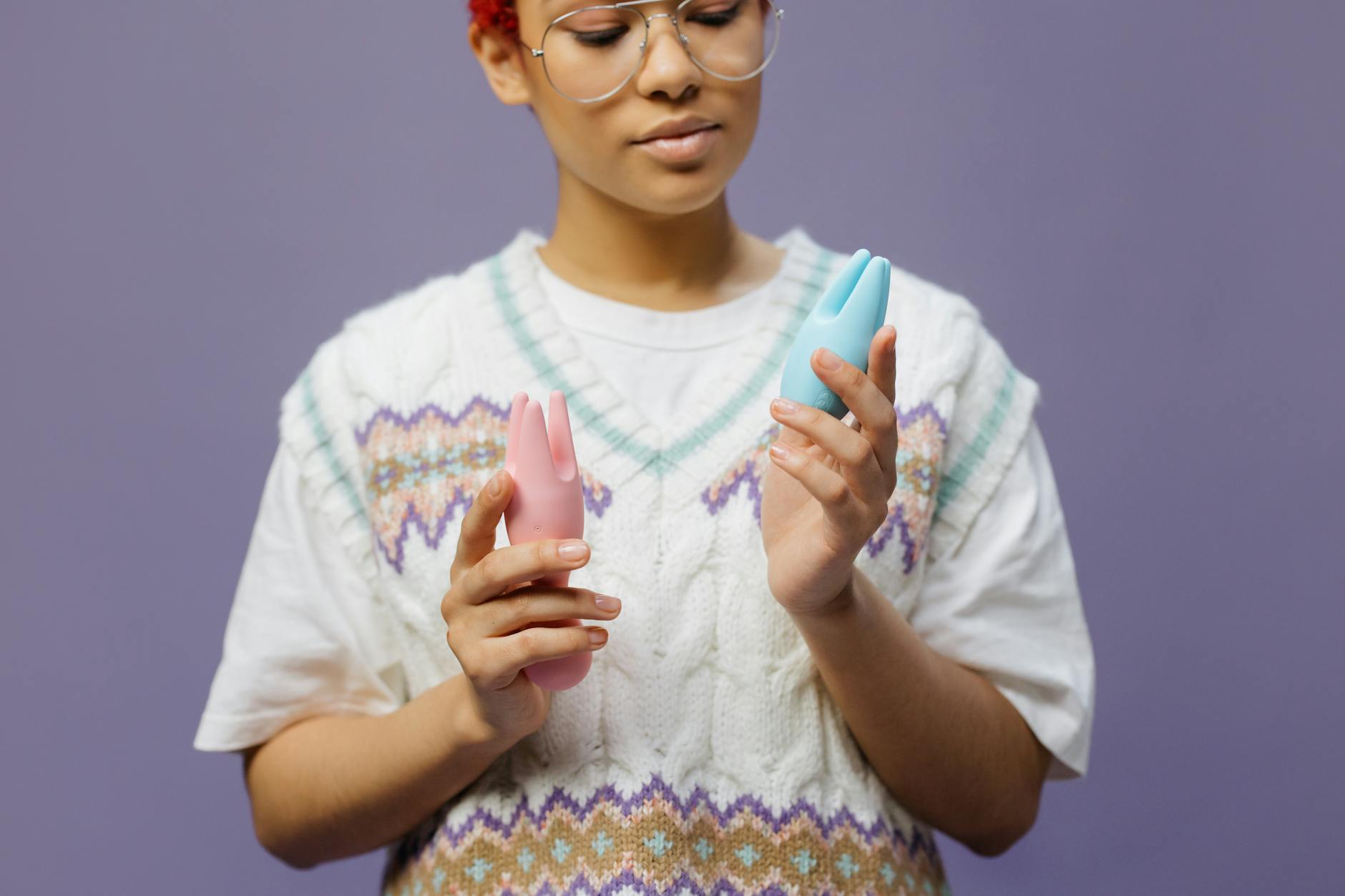
Let's be real about what's actually changing
You pick up your lemon vibrator and something feels off. It's the same toy you've been using for months, maybe years. But the sensation is different. Not worse, just different. And that difference is probably making you wonder if something's wrong with either the toy or your body.
Here's the thing: neither is broken. What's changed is your hormonal environment, and that shift affects how every part of your pleasure response works. The good news? Understanding why it feels different is half the battle to making it work even better.
How hormones actually shape sensation
Estrogen and testosterone don't just show up for fertility. They're actively remodeling your genital tissue, blood flow, and nerve sensitivity every single cycle. When those hormones drop—whether from cycle changes, birth control shifts, perimenopause, or hormonal medications—the entire physical landscape of pleasure reorganizes.
Here's what's happening at the tissue level:
Estrogen keeps the vaginal and clitoral tissue thick, elastic, and well-supplied with blood vessels. When it drops, that tissue thins. This sounds scary but it's not inherently bad. Thinner tissue is actually more sensitive to certain kinds of touch. The clitoral glans (the part most people stimulate) has the same nerve density whether you're 25 or 55, but how those nerves respond changes based on blood flow and tissue state.
Testosterone—yes, people with vulvas produce and use testosterone—drives genital blood flow and sensation intensity. When testosterone drops, arousal might take longer to build and the intensity of sensation can feel subtly different.
The pelvic floor muscles also shift. They get less estrogen support, which changes how they contract during arousal and orgasm. This can make some sensations feel sharper or more localized rather than diffuse.
Why lemon vibrators respond differently to your body after hormonal shifts
This is where the design of your toy matters more than most people realize. Traditional vibrators rely on high-speed oscillation to stimulate nerves through direct friction. When your tissue thins or your blood flow patterns shift, that friction-based approach can feel too intense, too numb, or somehow off.
Lemon clitoral vibrators use suction and gentle pulsation instead. This approach actually works better with shifting hormones because it doesn't depend on tissue thickness or sustained friction. Suction creates a seal and stimulates the entire clitoral body, not just the surface. The sensation is more about sustained pressure and rhythmic waves than rapid vibration.
What does this mean practically? After hormonal changes, your lemon vibrator might suddenly feel gentler or more satisfying than the high-frequency toys you've been using. Some people find they need lower settings. Others discover they can use it longer without overstimulation. A few find they need to use more lubricant than before, but the toy itself still works brilliantly.
The role of lubrication in feeling the difference
Lubricant is not optional after hormonal shifts. It's infrastructure. When tissue thins, lubrication changes how sensation transfers through the toy to the underlying nerves.
Water-based lube is your best bet because it won't degrade silicone toys and it mimics your body's own lubrication pretty closely. Silicone lube feels richer and lasts longer, but it can damage silicone toys if you're not careful with cleaning.
Here's the counterintuitive part: adding lube often makes sensation feel sharper, not duller, because it reduces uncomfortable friction. Your lemon vibrator paired with quality lube creates a smoother interaction between the toy and your tissue. That smoothness lets the suction and pulsation work more effectively.
Start with more lube than you think you need. You can always use less next time. Most people find they need about 20-30% more lubrication after hormonal changes, and that's completely normal.
Adjusting your speed and pattern with hormonal shifts
One of the sneaky parts about hormonal changes is that they can make your previous favorite settings feel wrong. The speed that used to drive you wild might suddenly feel too intense or not intense enough.
This doesn't mean you need a new toy. It means your nervous system is responding to different input signals. Your lemon vibrator likely has multiple patterns and intensity levels. After hormonal changes, you're probably going to find yourself gravitating toward lower speeds with longer pulses, or higher speeds with gentler patterns.
The best approach is systematic exploration. Start at the lowest setting and work up slowly over several sessions. Notice which patterns and speeds create that building sensation you want. Most people find that gentler, more sustained stimulation works better than rapid oscillation after hormonal shifts.
You might also notice that warm-up time matters more. Give yourself 15-25 minutes instead of 5. That extended time builds arousal naturally, which increases blood flow to the genital tissue and makes everything more responsive.
What people get wrong about pleasure and hormones
The biggest myth is that hormonal changes ruin pleasure. The second biggest is that they don't matter. Both are wrong.
Hormonal changes do alter sensation, but they don't eliminate capacity. Some of the most intense orgasms people report happen after hormonal shifts because the nervous system reorganizes in ways that can actually increase sensitivity to the right kind of stimulation.
Another thing people get wrong: thinking you need a completely different toy. You don't. Your lemon vibrator is still an excellent tool. You might just need to use it differently, with more lube, at different speeds, for longer warm-up periods. The fundamentals of what made it work are still there.
When to check in with a doctor
If sensation changes come with pain, bleeding, or significant discomfort, that's worth discussing with a gynecologist. Some hormonal changes create tissue conditions that benefit from topical treatments.
If you're on hormone replacement therapy or considering it, your prescriber should know you're noticing changes in sensation. This is clinically relevant information that helps them dial in the right dose.
If desire has completely tanked along with sensation changes, that's worth exploring too. Sometimes it's hormonal. Sometimes it's something else entirely wearing a hormonal disguise. Either way, a conversation with someone trained in sexual health can help.
The pleasure toolkit after hormonal change
You've got a clitoral vibrator that works with suction instead of friction. You've got quality lube. You've got time and patience for longer warm-up. You've got an understanding that your body isn't broken, it's just reorganized.
That's actually a pretty solid foundation. Most of my clients find that once they adjust expectations and technique, their pleasure actually expands rather than contracts. The lemon vibrators they were using before suddenly feel newly configured to their body. Sensation that felt numb becomes nuanced. Speed that felt necessary becomes optional.
Your body didn't lose the capacity for pleasure. It just asked you to get curious about how pleasure works now. That curiosity is where better experiences live.
People also ask
Do lemon vibrators work differently at different points in your hormonal cycle?
Yes. During the follicular phase (higher estrogen), tissue is fuller and you might want faster speeds. During the luteal phase (higher progesterone), you might prefer slower patterns or need more warm-up time. Hormonal birth control flattens these variations, which is why some people find sensation changes when they switch contraceptive methods. Track what works when and you'll stop being surprised.
Can you use the same lemon clitoral vibrator after menopause?
Absolutely. Menopause creates significant hormonal changes, but suction-based toys like lemon vibrators actually work particularly well for post-menopausal bodies because they don't rely on thick tissue or rapid friction. You might need more lube and longer warm-up time, but the toy itself is still excellent. Some people find they prefer their lemon vibrator more after menopause than before.
Why does my vibrator feel weaker after I started hormonal birth control?
Birth control changes your baseline hormone levels, which affects genital blood flow and tissue state. This can make sensation feel duller or more distant. It's not the toy, it's your nervous system's input. This usually stabilizes after three months. If it doesn't, talk to your prescriber about adjusting your dose or method.
Does hormonal imbalance affect how clitoral vibrators feel?
Yes. Thyroid issues, PCOS, and other endocrine conditions can alter sensation and arousal patterns. If you're noticing significant changes in how your lemon vibrator feels and you haven't explored your hormone levels with a doctor, that's worth doing. Fixing underlying hormonal imbalance sometimes improves sensation more than any technique adjustment.
Should I buy a different vibrator if hormonal changes made mine feel different?
Not necessarily. Before you replace it, try adjusting lube, speed, pattern, and warm-up time. Most people find their existing toys work great once they understand what their body needs now. If you've genuinely tried everything and still aren't satisfied, explore other options. But often the fix is technique, not replacement.
Is it normal for sensation to feel numb after hormonal changes?
Yes, temporarily. When hormone levels drop or shift, reduced blood flow can make sensation feel distant or muted. This usually improves with lube, longer warm-up, and patience. If numbness persists for months and isn't improving, check in with a sexual health specialist. Persistent desensitization sometimes responds to topical treatments or other interventions.
The bottom line
Your lemon vibrator didn't stop working. Your body reorganized around different hormonal signals, which means the way you interact with pleasure needs to shift too. That's not failure. It's adaptation. Once you understand what's changed and why, you can actually access pleasure more effectively than before. The toy was always good. Now you've got the information to use it brilliantly.