
Here's the thing about introducing lemon vibrators to a new relationship
You're comfortable with your device. You know which patterns work, how long warm-up takes, exactly where the sweet spot is. Then you meet someone new. And suddenly that lemon sucker in your drawer feels like both a gift and a minefield.
The vibrator itself hasn't changed. But the whole context has. Your arousal rhythm is different. The pressure is different. The vulnerability is different. And the way your partner perceives it, responds to it, and participates in it matters in ways that solo use simply doesn't.
I've watched countless clients hit an invisible wall here. They assume the problem is physical. It's almost never physical. It's the gap between what they expect to feel and what actually shows up when someone else is in the room.
Why the sensation shifts when someone new is present
Your nervous system is in a different state. When you're alone, you control the pace, the pressure, the exact moment of intensity. With a partner, there's an element of surrender. Your brain is also managing the connection, reading their signals, wondering if they're enjoying this as much as you are. That cognitive load changes your baseline arousal.
Physically, arousal takes longer. Research on couples' sexuality shows that the average warm-up time nearly doubles when a partner is involved, especially in early-stage relationships. Your body isn't being difficult. It's doing exactly what a nervous system in a new intimate space is supposed to do: take its time.
There's also the matter of attention. A lemon vibrator like the Lem works through precise stimulation. When you're alone, you can micro-adjust position constantly. With a partner, you're often holding relatively still. That small loss of control can make the sensation feel less intense, less direct, or oddly delayed.
Communication before, during, and after
This is the part that separates a mediocre experience from a genuinely connected one.
Before you introduce the device, talk about it when you're not in bed. Not as a big conversation with capital letters. Just a normal check-in. "I really love using this with myself. I'd love to explore it with you sometime." That's it. You're not asking permission. You're offering an invitation and giving them context to process it.
Many people's first instinct is anxiety, not attraction. They wonder if they're not enough, if you need the toy instead of them. A ten-second sentence preempts months of unspoken worry.
During: narrate. "This feels amazing right now, can you stay here a second?" or "I want to try a different angle, can you adjust slightly?" Your partner cannot read your body the way you can. Guidance is sexy. Silence is isolating.
After: connect without the device for a few minutes. Hold each other. This isn't because you need to "balance" pleasure. It's because your nervous system is still somewhat activated and your partner is now part of that activation. Togetherness cements that this was a shared experience, not a solo performance they witnessed.
The texture of vulnerability is different each time
Introducing any intimate tool to a new partner requires revealing something: that you have pleasure needs specific enough to require equipment, that you've already spent time getting to know your own body, that you're willing to be a little exposed in front of them. Some people find this thrilling. Some find it terrifying. Most find it both.
Your lemon vibrator, in a way, is a declaration of your own agency. You're saying "here's what I like." That's powerful. It's also, for some partners, unfamiliar. They may have grown up with the idea that good sex means the partner intuitively knows what to do. A vibrator is a cheerful dismantling of that myth.
Give them room to adjust. Not by hiding the device or apologizing for it. By normalizing it. "I love this. I think it could feel amazing for both of us. And if it feels weird at first, that's okay. Weird settles." That's the kind of permission that actually works.
Rhythm and tempo change in a partnered context
When you use a lemon clitoral vibrator alone, you control the entire arc. You build, plateau, plateau some more, then trigger the release. With a partner watching, or participating, or just being present in the room, that arc gets compressed.
Your nervous system is partly focused on them. That's not a bad thing. It's actually deeply erotic. But it does mean your orgasm might arrive faster than you're used to. Or slower. Or from a completely different angle because the suction pattern feels different when you're not alone, when your body is slightly tense from the new presence.
Lower your expectations of consistency. This is not the time to chase the exact sensation you get when you're solo. This is the time to let the experience be new. That's actually the gift. You get to rediscover your own body through someone else's presence.
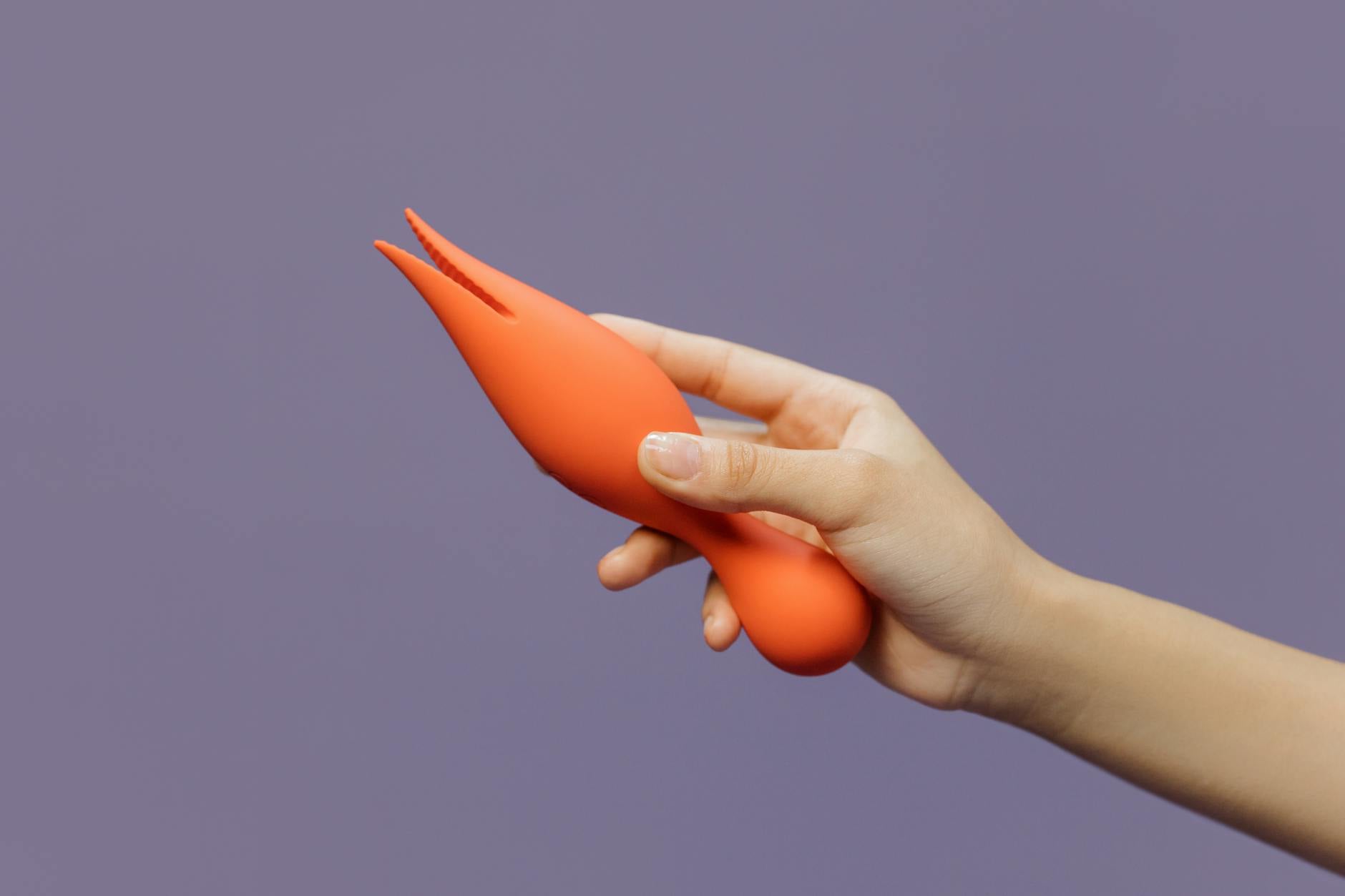 Photo by cottonbro studio on Pexels
How to position yourself and the device for shared pleasure
Angles matter more in partnered use. When you're alone, you tilt your pelvis or move the toy millimeters to find the exact spot. With a partner, you've got less range of motion. The device needs to do more of the work.
One thing I recommend: explore angles before you're in an aroused state. Have the conversation lying down, clothes on, no pressure. "When we do this, I think this angle will work best." Physical familiarity without the activation of arousal is powerful. It removes mystery at the wrong moment.
Consider also who holds the device. Some people love maintaining control and having their partner witness that. Some prefer having their partner hold it so they can relax completely into sensation. Neither is better. But the choice should be intentional.
If your partner is holding a lemon sucker like the Lem, remind them: gentle pressure, patience, and watching your body for feedback. A vibrator isn't a button to push and hold. It's something you learn together.
Timing and readiness in new relationship stages
How long do you wait? This varies wildly based on attachment style, relationship history, and your own comfort level. There's no universal timeline.
I've seen couples introduce devices in week three and have it feel completely natural. I've also seen couples who've been together for months who aren't ready. The readiness isn't about duration. It's about whether you both feel secure enough to be genuinely vulnerable.
One guideline: wait until you've had good sex without the device. Not because you "need" to prove anything. But because it establishes a baseline of comfort and communication. A vibrator works best as an addition, not an introduction.
If your partner expresses hesitation, don't interpret it as rejection of you. Unpack it. "What worries you about this?" The answer might be insecurity. It might be sensory aversion. It might be past experience. Whatever it is, it deserves a conversation, not a work-around.
Reframing how you think about your lemon vibrator in partnered space
Your device isn't there to compensate for anything. It's not replacing your partner's touch. It's expanding the palette of sensation you experience together.
The best couples I work with aren't the ones who seamlessly integrate toys from day one. They're the ones who are genuinely curious about each other's pleasure, willing to ask questions, and okay with things feeling a little awkward at first. That awkwardness is the price of depth.
If you've already worked through how to use lemon vibrators with a partner without awkwardness, you know the basic choreography. This post is about the emotional and sensory ground beneath that choreography.
A new partner changes the temperature of everything. Your breath is more audible. Your vulnerability is more visible. Your pleasure is less private. That's not easier than solo use. But it's richer. And if you move into it with intention rather than assumption, it becomes one of the most connected experiences available.
FAQ: New partners and lemon vibrators
Why does my lemon clitoral vibrator feel less intense with a new partner?
Intensity drops partly because your nervous system is split between your own sensation and managing connection. Your pelvic floor also tends to tense slightly in early relationship intimacy, which changes how suction-based devices like the Lem feel. This stabilizes as the relationship deepens and your nervous system trusts the space.
How do I know if my new partner is comfortable with me using a vibrator?
Don't assume comfort based on body language. Ask directly. "Would you be into exploring this with me?" If there's hesitation, curiosity usually follows. If there's a hard no, respect it and explore why later. Some partners come around after conversations. Some don't. Both are valid.
Should I use my lemon vibrator the same way solo versus with a partner?
No. Solo use can be faster, more forceful, more about chasing a specific sensation. Partnered use is usually slower, gentler, more exploratory. Think of it as learning a new version of your own body alongside someone else.
What if introducing a vibrator creates tension between us?
Tension usually means something needs to be talked about that isn't yet. Is it insecurity? A mismatch in desire? A difference in how you view pleasure? Don't assume the vibrator caused the tension. It usually just revealed something already present.
Can using lemon vibrators together bring us closer emotionally?
Yes. Shared vulnerability and mutual pleasure create genuine bonding. But only if the foundation of communication and consent is solid. Without that, it can create distance instead. The vibrator amplifies what's already there.
How long should I wait before introducing a lemon sucker to a new relationship?
Wait until you feel genuinely secure with that person and you've had satisfying sex without it. Usually that's at least three to four weeks of consistent intimacy, but it depends on your attachment style and the relationship's trajectory.
The deeper work: why this matters beyond pleasure
Introducing a lemon vibrator to a new partner is really about learning to ask for what you need. It's about discovering whether someone can receive your pleasure as a good thing, not a threat. It's about building the kind of intimacy where your body's full spectrum of sensation is welcomed.
Some partnerships will surprise you. Some won't. But the act of trying tells you something important about compatibility that you can't learn any other way.
Your body deserves pleasure. Your partner deserves to be part of that if you're inviting them in. And you both deserve the clarity that comes from actually talking about what you want instead of hoping the other person figures it out.
That's the real shift when a new partner enters the picture. It's not the vibrator that changes. It's your willingness to claim your own pleasure as something worth naming, worth exploring, and worth protecting.