How to Use Lemon Vibrators When You Have Variable Arousal Cycles Across Your Menstrual Month
The thing nobody explains about your arousal
Your body isn't a steady machine. Every seven to ten days, something shifts in how quickly you heat up, what kind of touch you crave, and how intensely your clitoris responds. If you're using the same vibrator setting all month, you're probably fighting your own biology at least half the time.
Most of us are taught that pleasure is constant. It's not. Hormonal fluctuations during your cycle create predictable shifts in arousal speed, clitoral sensitivity, and the type of stimulation that feels best. Learning to work with those shifts, rather than against them, changes everything.
How your cycle actually affects clitoral sensation
Here's the physiology in plain language. Estrogen rises during the follicular phase (days 1-14ish), which increases blood flow to your clitoris and makes the tissue slightly more engorged. This usually means faster arousal and sensitivity to lighter touch. Your clitoris becomes more prominent, and suction-based stimulation like what lemon vibrators deliver tends to feel particularly responsive.
After ovulation, progesterone rises during the luteal phase. Blood flow to the clitoris actually decreases slightly, which can make arousal take longer. Your clitoris may feel less prominent. Some people describe needing more direct, deliberate stimulation during this phase. Others find they need longer warm-up time but experience more intense sensations once they're aroused.
The follicular phase is often called the "easy arousal" week. The luteal phase is more like "slow burn, deep focus." Neither is better. They're just different, and your lemon clitoral vibrator needs different settings across each one.
What changes, week by week
Week 1 (Menstruation): Your clitoris may feel tender or less responsive due to reduced estrogen. Many people prefer lower intensity, shorter sessions, or taking a break entirely. If you do use your lemon vibrator, start at pattern 1 or 2. The key is permission to skip. Pleasure is not a performance.
Week 2 (Early Follicular): Estrogen is climbing. Arousal quickens. Your clitoris feels more prominent and engorged. This is often when people can orgasm fastest and most reliably. You can handle higher intensity settings and shorter warm-ups. Patterns 3-5 on the Lemon vibrator often feel perfect here.
Week 3 (Ovulation through Early Luteal): This is the bridge phase. You might have one or two peak-arousal days right around ovulation, then a shift. If you track ovulation, use those peak days as your baseline for intensity. After ovulation, dial it back slightly. Patterns 2-4 feel more comfortable for most people.
Week 4 (Late Luteal / Pre-menstrual): Progesterone dominates. Arousal takes longer to build. Your clitoris feels less engorged. You need longer foreplay, more direct pressure, and often more time overall. Switch to patterns 1-3, but use them longer. Some people find they need 20-30 minutes instead of 10. That's normal.
Why this matters for pleasure, not just anatomy
Here's what I hear from people who start syncing their vibrator use with their cycle: "I stopped feeling broken." The insight is simple but powerful. If you're using maximum intensity on day 21 of your cycle and nothing's working, you don't have a pleasure problem. You have a mismatch between what your body needs and what you're asking of it.
Syncing your lemon vibrators to your cycle also reduces overstimulation. If you're using high intensity during your follicular phase when your clitoris is already engorged and sensitive, you can numb yourself out quickly. Using lower intensity during that phase trains your body to stay responsive. Then when you switch to higher intensity in your luteal phase, your clitoris hasn't been habitually over-stimulated.
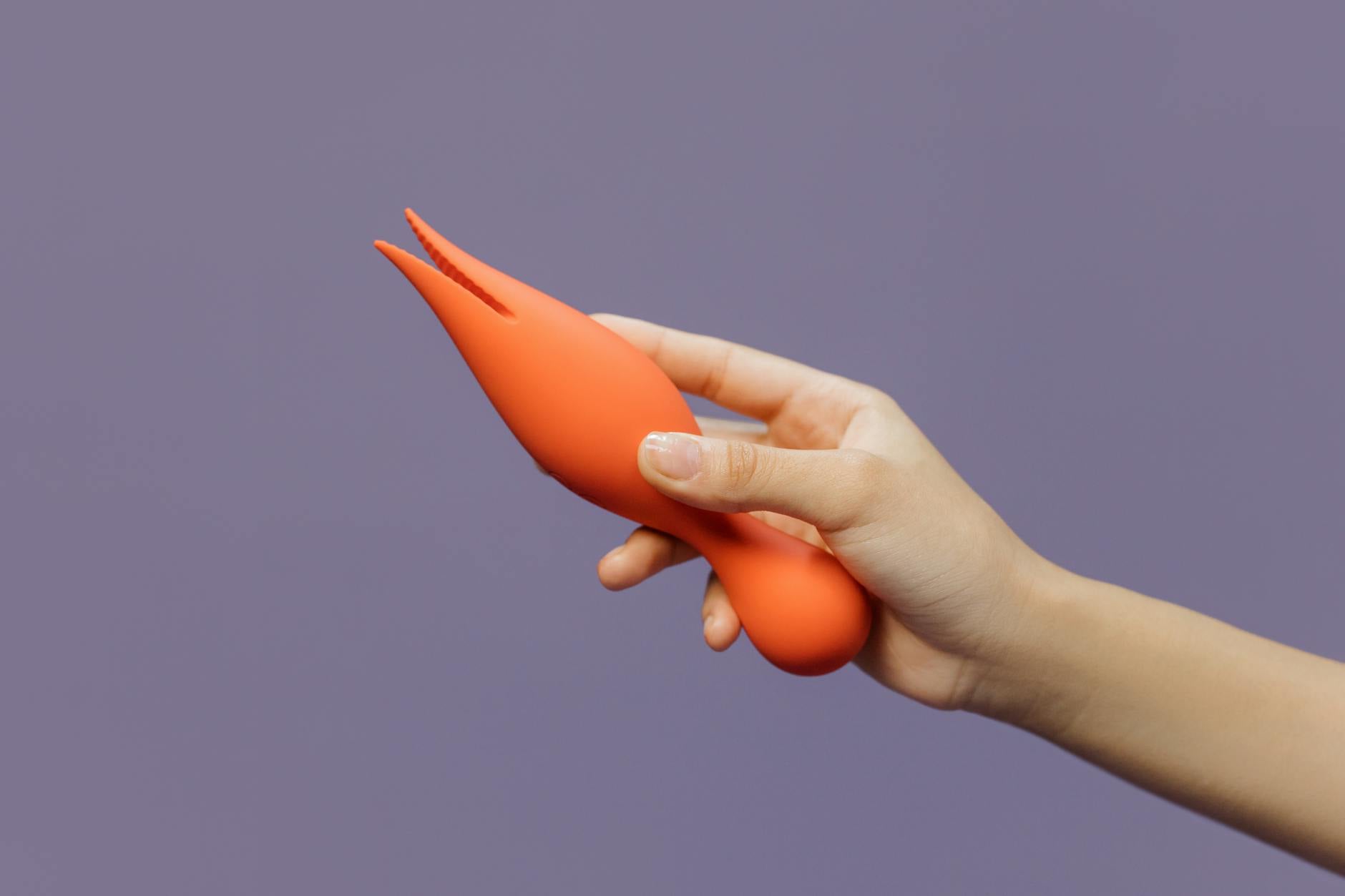
Photo by cottonbro studio on Pexels
How to track what your body actually needs
Stop trying to guess. For one full month, log three things: what day of your cycle you're on, which pattern on your lemon vibrator you used, and how long it took to orgasm (or whether you did). Use a simple note app or a menstrual tracking app that lets you add custom fields.
After one month, patterns emerge. You'll probably notice that week 2 feels consistently easier, or that week 4 needs longer sessions. Maybe you discover you need pattern 5 on day 12 but pattern 1 on day 22. That data is gold. It means you're working with your body, not against it.
This isn't about being rigid. Life happens. Stress tanks arousal regardless of cycle phase. A new partner or reconnection with a long-term partner changes what feels good. Sleep, hydration, and exercise all matter. But your baseline cycle rhythm is real, and working with it is the fastest way to stop feeling like something's wrong with you.
The lubrication pattern that shifts, too
Most people assume they need more lubrication in the luteal phase because arousal is slower. True. But there's another layer: the type of lubrication your body produces shifts. In the follicular phase, natural lubrication tends to be thinner and more slippery. In the luteal phase, it's usually thicker and stickier.
This changes what external lubrication feels best. In week 2, a thin water-based lube feels seamless. In week 4, you might want something slightly thicker so it doesn't dry out as fast during your longer sessions. Experiment. You're not being high-maintenance. You're being intelligent about what your body needs.
When to ignore the pattern and trust your actual day
Here's the honest part: not everyone's cycle is exactly 28 days, and hormones aren't always predictable. Stress, travel, illness, and medications all shift your cycle. So do the phases of your cycle themselves. Some people's follicular phase is eight days, others' is fourteen.
Use the four-week rhythm as a map, not a mandate. If you wake up on day 20 and your clitoris feels engorged and arousal is fast, use pattern 5 even if week 4 is "supposed" to be slow. If you wake up on day 12 and everything feels tender, use pattern 1. Your body's signal trumps the calendar. The calendar is just a starting point for learning what your signal usually is.
This is where tracking matters. After a few cycles, you start recognizing your pattern, not the generic one. Maybe your ovulation is early, which means your arousal peak is day 11, not day 14. Maybe your luteal phase is long, which means you have two weeks of needing slower stimulation. That's the data that changes everything.
Using Lemon vibrators across your full cycle
The suction-based technology of lemon clitoral vibrators is particularly responsive to cycle-based changes. Unlike vibrators that rely purely on friction or rapid buzzing, suction stimulates your clitoris through air-pulse patterns that are less reliant on a specific tissue state. This means you can use the same device across all four weeks of your cycle. You're just changing the pattern and duration.
During your follicular phase, patterns 3-5 feel generous and fast. The suction patterns stack well with your body's natural responsiveness. During your luteal phase, drop to patterns 1-3 but use them for longer sessions. The gentler patterns work with your slower arousal trajectory instead of fighting it.
Many people find that having one quality lemon vibrator they understand deeply matters more than switching between devices. You learn its patterns, how each one feels against your body in different states, and when to use them. That familiarity itself becomes part of the pleasure.
Talking to a partner about your cycle
If you share your body with someone, this is worth explaining. Not as medical information, but as texture. "Week 2, I'm fast and sensitive. Week 4, I need more time but the payoff is different." This gives your partner permission to adjust too. Maybe they hold back on intensity early in your cycle and invest longer in week 4. Maybe they learn that your clitoris needs a specific pattern of attention on certain days.
This kind of specificity deepens intimacy. It says "I've paid attention to my body, and I'm telling you what I know." Partners often feel relieved to have actual information instead of guessing.
FAQ
Can you use lemon vibrators every day of your cycle?
Yes, but intensity and duration shift. Week 2, maybe 10-15 minutes at pattern 4. Week 4, maybe 20-30 minutes at pattern 1. The key is adjusting to what your body needs, not forcing the same approach all month. Some people take full breaks during menstruation. That's fine too.
Does your clitoral numbness get worse during certain cycle phases?
Yes. If you've noticed clitoral numbness, it often shows up most in your follicular phase because you can handle high intensity more easily and then habituate faster. Protecting your sensitivity during high-arousal weeks often means using lower intensity even when you could theoretically go higher. This keeps your nerve endings responsive all month.
What if your cycle is irregular or you're on hormonal birth control?
Hormonal birth control flattens the cycle rhythm, which means arousal patterns become more stable month to month, but the deep peaks disappear. You might find that one intensity setting works consistently, or that you need only subtle adjustments. Track anyway. Your body still has preferences, they're just less dramatic. If your cycle is irregular, tracking becomes even more useful because you'll spot patterns that aren't calendar-obvious.
Can stress affect how this works?
Absolutely. High stress suppresses arousal regardless of cycle phase. If you notice week 2 isn't behaving like it normally does, check sleep, hydration, and stress levels before assuming your cycle is wrong. Your body's baseline rhythm is still there underneath the stress response. Once stress decreases, the pattern usually re-emerges.
Should you avoid your lemon vibrator during certain days?
No. But you might choose to. Some people find menstruation feels better with rest. Some people prefer clitoral stimulation during menstruation because internal sensation is uncomfortable. There's no "should." Your body will tell you if you listen.
How long does it take to learn your personal cycle pattern?
One full month of tracking usually shows broad patterns. Three months shows the nuance. By month four, you probably know your body's rhythm well enough to adjust automatically. After that, life changes like new medications, stress, or relationship shifts might alter the pattern slightly, so you might need to recalibrate. But the skill of paying attention becomes permanent.
The deeper reason this matters
When you use lemon vibrators in sync with your cycle, you're not just optimizing for better orgasms. You're learning to trust your body's signals. You're building literacy around your own pleasure rather than outsourcing it to a generic playbook.
This is relationship work, not just solo work. If you have a partner, knowing your own cycle deeply means you can communicate what you need instead of hoping they guess. If you're solo, it means you stop feeling broken on "off" weeks and start recognizing them as a different kind of pleasure, not a failure.
Your clitoris is not a machine. It's a responsive system that changes week to week. Learning to dance with those changes is the skill that transforms pleasure from something that feels random and unreliable into something you can actually trust.
Start tracking this week. Pick one cycle. Notice everything. Your body's already been sending signals. Now you're just learning to read them.