The fear that stops you before you even start
Here's what I hear in my office almost weekly: "I want to use a vibrator with my partner, but what if they think I'm not satisfied with them? What if they think I'm replacing them? What if they just... leave?"
That last question lands different. And it deserves a real answer.
The fear of introducing a lemon clitoral vibrator to a new partner isn't actually about the toy. It's about what you imagine the toy means. It means you're not enough. It means you're high-maintenance. It means you're signaling something is wrong. And if your partner is already someone you're uncertain about, that risk feels enormous.
Let me separate the facts from the fear.
What introducing a toy actually signals
When you bring up using a lemon vibrator with a new partner, you're not saying "You're failing me." You're saying three things, in order: "I know my body." "I want to share that with you." "I'm willing to be vulnerable about it."
Those are not weakness signals. They're competence signals. People who know themselves, who can ask for what they want, and who can be honest about their sexuality are generally the people worth staying with. This is not universal, but it's the statistical truth. Partners who react poorly to a conversation about pleasure are often showing you early data about how they handle other difficult conversations too.
I'm not saying every partner will love the idea immediately. But the ones who reject it outright? That's diagnostic information. You're not losing something good. You're confirming something you needed to know.
The actual structure of the conversation
Fear is abstract. Conversation structure is concrete. Here's what actually works.
Pick your timing carefully. Not mid-argument. Not when they're stressed or tired or distracted. Pick a moment when you're both relaxed, fed, and not about to leave for work. Sunday morning. After a good dinner. During a walk. Timing is underrated.
Start with your own experience, not the toy. "I've been thinking about what brings me pleasure, and I realized I want to explore something. I'd like your input." This frames it as self-knowledge, not criticism of them.
Name the fear openly. "I'm a little nervous about bringing this up because I don't want you to feel like I'm saying something's missing." Naming the vulnerability does two things. It disarms their defensiveness (you're not attacking, you're being honest). And it gives them permission to name their own anxiety instead of acting it out.
Offer specific information. "I'm interested in trying a lemon clitoral vibrator. It's not about replacing anything. It's about adding sensation in a way my body responds to well." Specificity is reassuring. Vagueness creates space for catastrophic thinking.
Hand them agency. "Would you want to be part of this? Or would you rather I explore it solo? Both are fine." Some partners want to be involved. Some don't. Both are valid. Offering choice removes the power dynamic.
Why lemon vibrators specifically work better in new relationships
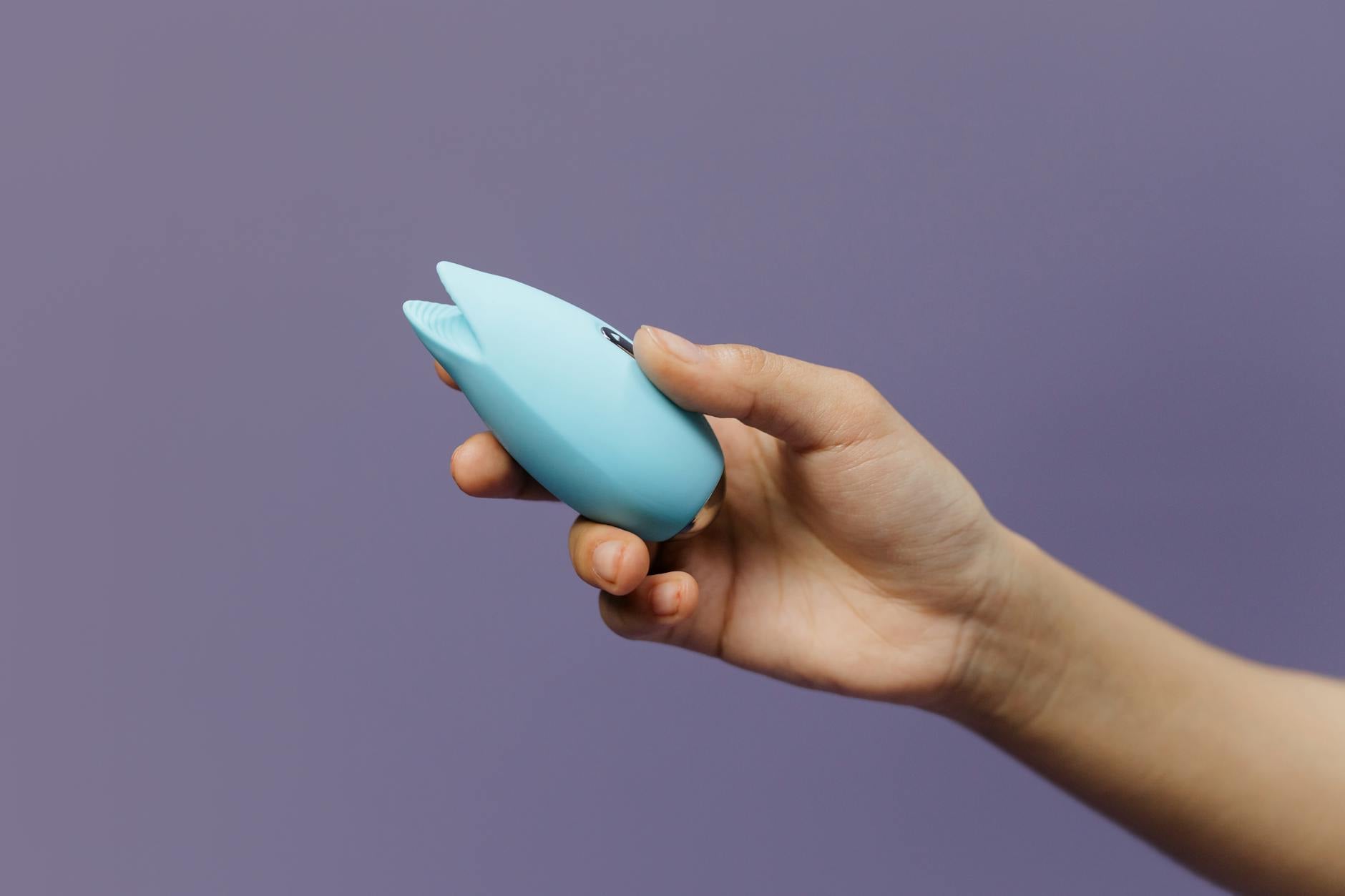
I recommend lemon clitoral vibrators and suction toys to clients navigating this conversation for one specific reason: they're obviously tools, not replacements.
A vibrator that mimics the sensation of a partner can trigger comparison anxiety ("Am I being replaced?"). A suction-based clitoral vibrator does something no human body can do. It's categorically different. It's clearly a tool for a specific sensation.
When your new partner sees a lemon vibrator, they're looking at a device. Not a threat. And that distinction matters when you're trying to build trust.
What to do if they react badly
Let's be honest. Some people will reject the idea. Some will make jokes. Some will get defensive or angry. What you do next depends on what you're willing to tolerate.
If they're dismissive but not hostile ("That's weird, I don't get it"), you have a choice. You can drop it or you can educate. "It's not weird. A lot of people use them. Here's why I'm interested." Sometimes that lands. Sometimes it doesn't.
If they're actively hostile ("If you need that, maybe we're not compatible"), that's information. In a relationship with communication anxiety, that kind of ultimatum should set off alarms. People who punish you for knowing yourself don't get softer over time.
If they're genuinely curious but nervous, that's actually the best scenario. Nervousness means they care what you think and they're open to being convinced. That's the person you can work with.
How to actually use a lemon vibrator with a new partner
Once the conversation lands okay, the physical part is straightforward but easy to overthink.
Start clothed. Seriously. Use it over your underwear or during foreplay before anything is fully exposed. This takes the pressure down. You're experimenting, not performing.
Communicate in real time. "That feels good." "A little slower." "More pressure." New partners often don't know your body yet. Your narration is his roadmap. It's also deeply intimate in a non-sexual way. You're teaching them who you are.
Let them control it sometimes. If they want to hold the lemon clitoral vibrator, let them. This shifts it from "your thing" to "our thing." They get to participate in creating your pleasure. That's not threatening. That's bonding.
Don't expect fireworks immediately. First time with a toy and a new partner is usually awkward. That's normal. Awkwardness doesn't mean it's wrong. It means you're learning each other. That takes time.
The conversation with yourself first
Before you talk to your partner, talk to yourself. What are you actually afraid of? Rejection. Judgment. Losing them. Those are real fears, but they're not facts.
If you know your body well enough to want to use a lemon vibrator, you know this: your pleasure is not negotiable. It's not optional. It's not something you outsource to another person and hope they figure out. It's yours. You can share it, but you can't surrender it.
A partner worth keeping will get that. They might not understand immediately. But they'll try. And trying is everything.
FAQ: Communication anxiety and toys
Q: What if my partner thinks I'm buying a vibrator because they're not good in bed?
A: That's their story, not your fact. In my office, I tell people: you can only control your own communication. You can say clearly, "This isn't about your performance. This is about exploring my own body." After that, their interpretation is theirs to manage. If they choose to catastrophize instead of listen, that's diagnostic.
Q: Is it better to ask permission or just tell them I want to use a lemon clitoral vibrator?
A: Somewhere in between. You're not asking permission (it's your body, your pleasure). You're inviting them into the conversation. "I want to explore using a vibrator, and I'd like to know how you feel about that." This is collaborative without being submissive.
Q: How soon into dating should I mention this?
A: After you've established that sex is happening and you're both invested. That's usually four to eight weeks in, but it depends on your pace. The earlier you do it, the fewer assumptions they've made about what you like. The later you do it, the more time you've had to build trust. There's no perfect timing, only honest timing.
Q: What if they say yes but seem uncomfortable during it?
A: Stop. Pause the action. "Are you okay?" Listen to the answer. They might be nervous but fine. They might be genuinely uncomfortable. Either way, you get clarity. And you learn whether they can communicate when something feels off. That's useful information.
Q: Can using a lemon vibrator make it harder for me to orgasm with just my partner?
A: No. Your body doesn't "get used to" a sensation and stop responding to other sensations. You can enjoy a vibrator and manual stimulation and penetration. They all exist. None cancels the others out. Using a lemon clitoral vibrator expands what you know about pleasure. It doesn't shrink it.
Q: What if my partner wants to use the vibrator on me but I'm scared they'll do it wrong?
A: That's fair. You can guide them. "Lighter touch." "More on the left side." "Slower." Your body is not a puzzle they need to solve alone. It's a collaboration. You're both learning. And feedback is how learning happens.
The bottom line
Introducing a lemon vibrator to a new partner is not a risk you take. It's a boundary you set. It's information you offer. It's vulnerability you extend. And yes, sometimes it lands badly. But the people who reject you for knowing yourself are often the people who would have rejected you later for something else.
Your pleasure is not a luxury item you negotiate down to make someone comfortable. It's fundamental. A partner worth having will get that. And if you're not sure yet whether they will, a conversation about a vibrator is a safe way to find out.
If you're navigating bigger relationship questions around communication and intimacy, you don't have to figure it out alone. Hello Nancy is here to help.
Resources and further reading
If you want to dig deeper into communication anxiety and sexual confidence with partners, check out how we frame using lemon vibrators when your partner isn't interested in toys and the guide on reconnecting with pleasure after relationship changes. Both tackle similar trust dynamics from different angles.