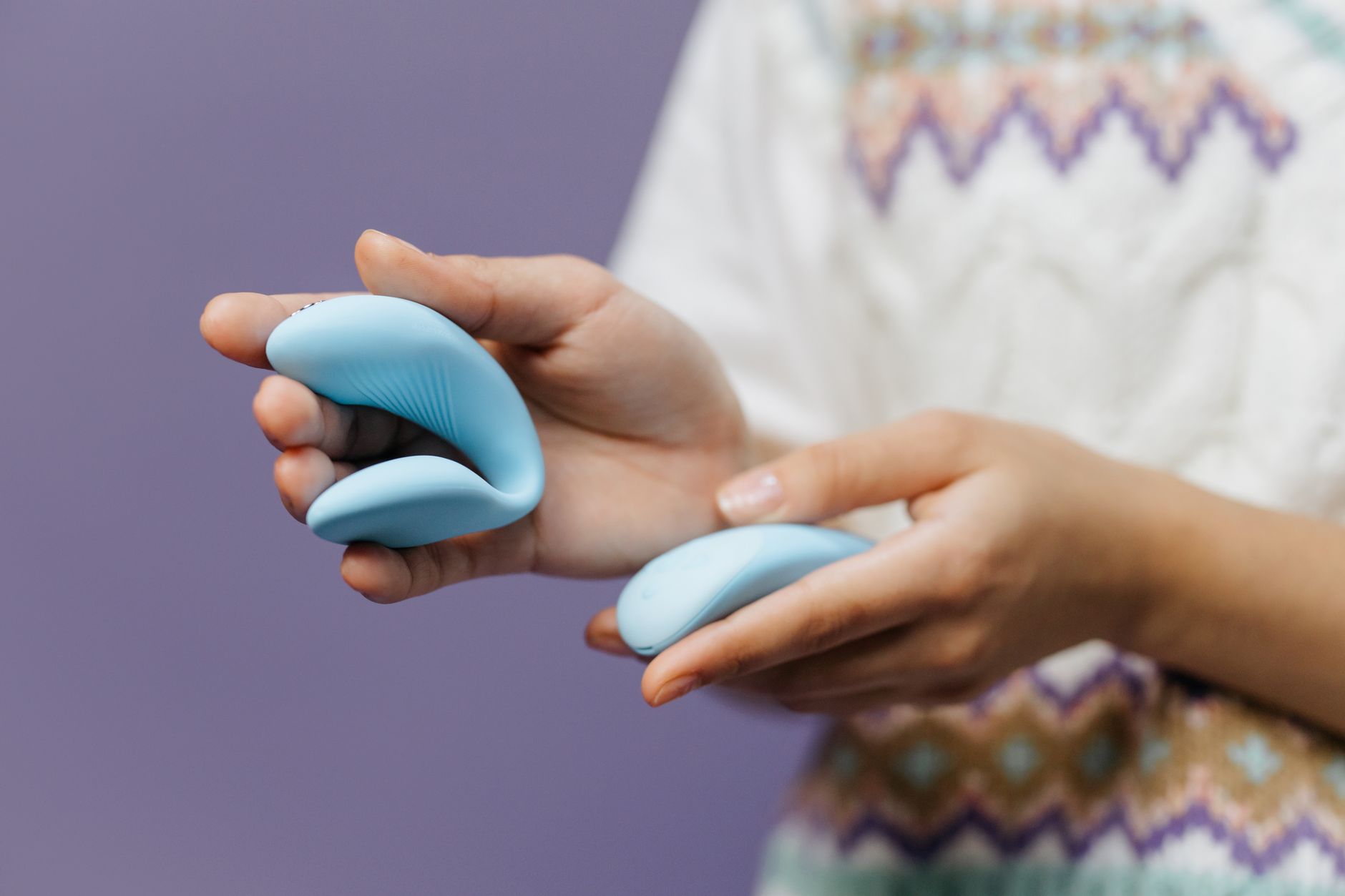
The intensity paradox
Let's be real: overwhelming clitoral sensation is one of the least talked about pleasure problems, which means people suffer through it in silence thinking something's wrong with them. Nothing is wrong. Your body's just telling you the volume needs turning down.
Here's the thing. Clitoral vibrators are engineered to deliver sensation directly to tissue packed with thousands of nerve endings. That's literally their job. But "direct" and "intense" aren't the same as "right," and when the pattern, speed, or contact feels like too much, your nervous system downshifts into defense mode. Arousal stalls. The experience flattens. You end up frustrated instead of satisfied.
The fix isn't to abandon the tool. It's to use it differently.
Why intensity overwhelms some people and not others
Three main culprits:
Nerve density varies wildly. Some people are naturally more sensitive in their clitoral tissue. This isn't better or worse. It's just wiring. If you're someone whose clitoris lights up at the slightest touch, a high-speed vibrator on direct contact will feel harsh, not pleasurable.
Arousal level shapes tolerance. Early in arousal, intense sensation reads as jarring. Mid-arousal, the same pattern might feel perfect. Late arousal, you might need even more. Most people skip the early calibration phase and go straight to full intensity, then wonder why it backfires.
Positioning matters more than you'd think. Direct contact on the clitoral glans feels strongest. Angled contact on the hood or surrounding tissue feels softer but can build deeper sensation over time. A quarter-inch shift changes everything.
The five-point recalibration approach
If intensity is shutting you down, run through these in order.
1. Start with the lowest pattern. This is not "boring" or "cheating." The first three settings on any Lemon Toys clitoral vibrator are designed for exploration, not just warm-up. Many people never try them long enough to let the sensation build. Spend 5-10 minutes with pattern 1 or 2 before considering a shift upward. Your body will tell you if it wants more.
2. Angle instead of press. Hold the vibrator at 45 degrees so the stimulation hits the clitoral hood rather than the tip. This distributes sensation across a wider area and softens the impact. It sounds minor. It's not. Most overwhelm comes from point-contact intensity, not from vibration itself.
3. Add distance through layers. If you're still finding direct contact too sharp, try stimulation over underwear or a thin fabric layer. This muffles the sensation just enough to let arousal build without the defensive jolt. You can remove the layer later once arousal deepens.
4. Use rhythm, not continuous contact. Move the vibrator in patterns: two seconds on, one second off, repeat. Or trace slow circles so contact intermittent rather than fixed. This creates anticipation and prevents sensation fatigue, which is often what gets mistaken for "too intense." Your nervous system actually craves rhythm over monotony.
5. Shorten sessions initially. Work with intensity for 3-5 minutes, then switch to manual touch or a different tool. Your clitoris builds sensitivity the more stimulation it receives in one session. Going easy on total contact time while you're recalibrating prevents that cascading overwhelm.
Lemon clitoral vibrators and intensity management
Lemon Toys makes some of the easiest tools to modulate because the pattern range is deliberate. The Lem vibrator, for example, has clear low-to-high progression without jumping suddenly into aggressive territory. This design feature matters when you're trying to find your actual pleasure threshold instead of defaulting to "all or nothing."
Start with patterns 1-3. Spend real time there. Most people don't because there's this cultural narrative that stronger is better, so we rush through the subtle stuff. But subtle is where control lives. Control is where pleasure becomes reproducible instead of accidental.
The partner conversation you need to have
If you're using a lemon vibrator with someone else, intensity overwhelm often gets misread as discomfort or rejection. "She doesn't like toys" when really she likes them at pattern 2, not 8. Or she prefers them on the hood, not the glans.
The conversation is simple: "I need us to go slower with intensity and explore what actually feels good instead of jumping to the strongest setting." That's not asking for less pleasure. It's asking for more precision. Most partners get this immediately once you frame it that way.
Signs you've calibrated correctly
You'll know you've landed in the right zone when your body stays relaxed between contractions. When you can breathe steadily instead of tensing. When sensation builds gradually instead of shocking. And when you actually want to continue instead of pulling away.
Intensity that's right for you feels like it's inviting your body further in, not pushing it away.
What to do if intensity stays too much
If you've worked through all five points and overwhelming sensation persists, three things are worth checking:
First, consider whether you're dealing with vulvodynia or another vestibular pain condition. These show up as pain or hypersensitivity that no amount of recalibration fixes. A gynecologist familiar with vulvovaginal pain can rule this out and point you toward actual solutions.
Second, check the toy itself. Defective units sometimes vibrate irregularly or at unexpectedly high frequencies. Contact Lemon Toys support if you suspect the tool isn't working as intended. They can troubleshoot or replace.
Third, revisit arousal timing. Sometimes what reads as "too intense" is actually "stimulated too soon." If you're using a vibrator within two minutes of starting, that's the problem. The clitoris needs 10-15 minutes minimum to prepare. Give yourself permission to take your time.
Building pleasure slowly pays off
Here's what most sex toy guides skip: intensity tolerance is trainable. Start with lower patterns and shorter sessions. Your body learns that vibration is safe, arousal builds faster, and what felt overwhelming six weeks ago feels comfortable now. This isn't about "conditioning" yourself into accepting something. It's about your nervous system actually getting comfortable with the sensation.
Many people who initially found lemon vibrators overwhelming end up loving them once they worked through recalibration. The tool didn't change. Their relationship to it did.
Frequently asked questions
Can you permanently reduce clitoral sensitivity to make toys less overwhelming?
No, and you shouldn't want to. Sensitivity is a feature, not a bug. What you can change is how you use tools in response to that sensitivity. Calibrating intensity, positioning, and pacing works with your body's wiring instead of against it.
Is overwhelming sensation during toy use a sign I shouldn't be using toys?
Not necessarily. It usually means the specific tool, pattern, or approach isn't right yet. Like how some people find vibration overwhelming but absolutely love air-suction stimulation or steady pressure. Different tools, different sensations. A lemon clitoral vibrator might feel too intense at pattern 5 but perfect at pattern 1.
How long should I spend at each intensity level before moving up?
At least five minutes, preferably 10. This gives your nervous system time to adjust and your arousal time to deepen. Moving too quickly doesn't let sensation register as pleasure. It just reads as "a lot." Patience actually unlocks better response.
Does using numbing lube help with overwhelming clitoral sensation?
Temporarily, but it's a workaround, not a fix. You're masking the problem instead of solving it. You also lose feedback about what's actually working for you. Better to dial in the right intensity, pattern, and technique so sensation feels good rather than trying to feel nothing.
Can anxiety about intensity make it feel worse than it actually is?
Completely. Anticipatory tension makes any sensation feel sharper. If you're bracing for "too much," your body will experience it as too much. Slowing down, breathing steadily, and using lower patterns helps break that anxiety loop. Your nervous system relaxes, and suddenly the same sensation that felt overwhelming feels fine.
Should I try a different brand of clitoral vibrator if intensity is overwhelming?
Before switching tools, exhaust the calibration options first. Different brands have different pattern ranges, but often the issue is approach, not hardware. That said, if you've done everything here and still feel overwhelmed, some people genuinely respond better to slower-speed vibrators or suction toys. Lemon Toys makes options across the sensitivity spectrum, so talk to support about what might suit your body better.
The path forward
Overwhelming sensation is fixable. It's not a limitation or a sign your body's "wrong." It's information. Your clitoris is telling you exactly what doesn't work so you can figure out what does. That clarity is actually a gift, even when it doesn't feel like one in the moment.
Start with pattern 1, add distance through positioning or layers, use rhythm over continuous contact, and give your body real time to adjust. Intensity is a tool you control, not something that controls you.