The performance spiral is real
Let's be honest. New partner sex comes loaded with invisible pressure. You're trying to seem relaxed while mentally running a checklist: Am I taking long enough? Too long? Is this what they like? Do I look right from this angle? Will they think I'm broken if I need extra time to come?
That mental load doesn't just kill the vibe. It actively stops your body from doing what it's capable of. Your nervous system can't simultaneously be hyperaware of being watched and genuinely aroused. Those two states aren't compatible.
Why the pressure hits harder than you think
Sociologically, people with vulvas have absorbed a lifetime of messaging: your pleasure should be easy, spontaneous, and perfectly aligned with your partner's timeline. Movies don't show women spending 15 minutes getting to orgasm. They show it happening in 90 seconds with minimal foreplay. When your reality doesn't match that fiction, the gap feels like a personal failure rather than just normal physiology.
Add a new partner to that equation and the stakes feel higher. You're not just managing your own expectations anymore. You're also trying to telegraph that you're enjoyable, easy, worth the effort. None of which is true when you're anxious. But that's exactly when the anxiety whispers it matters most.
How a clitoral vibrator rewrites the dynamic
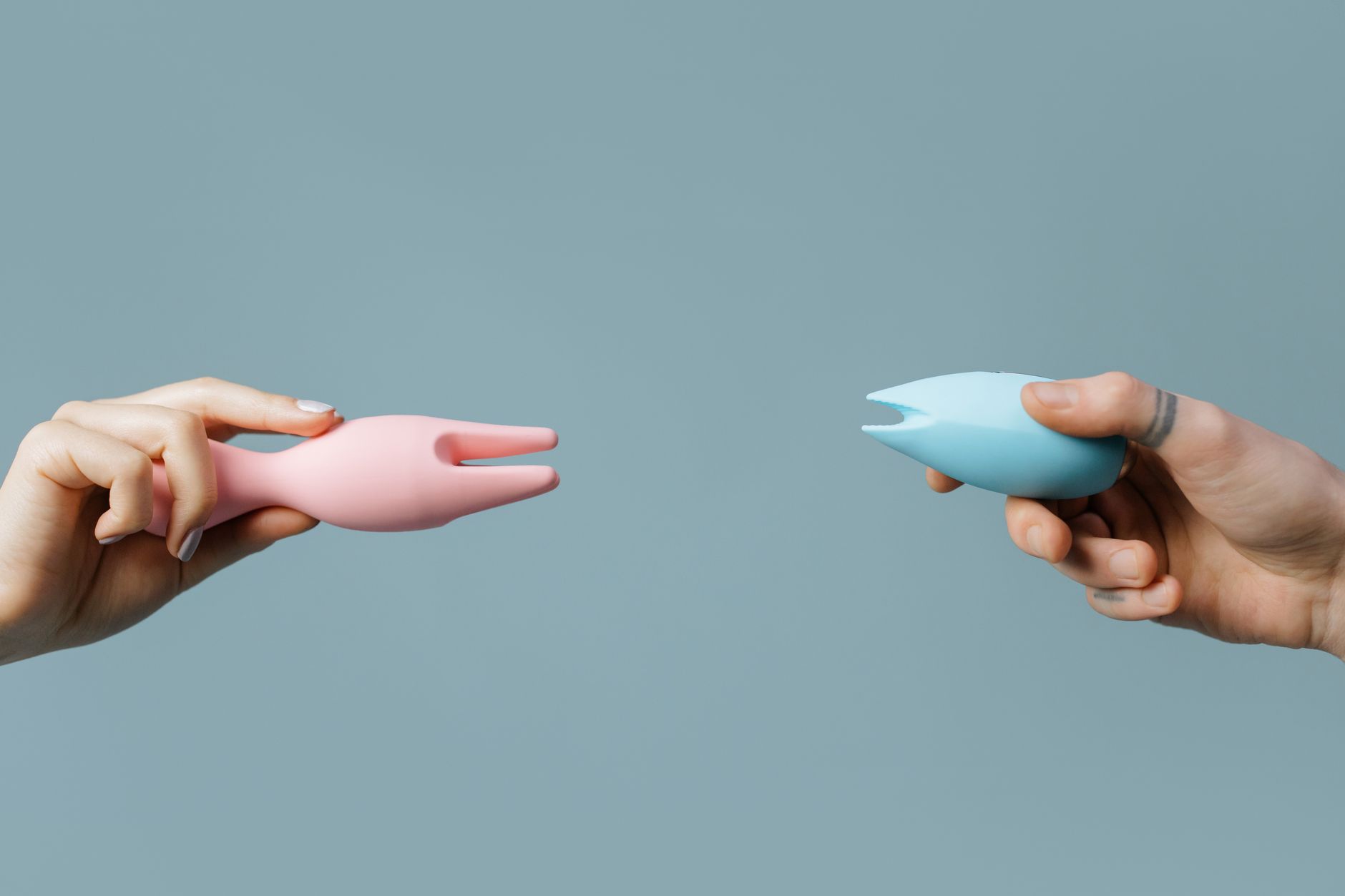
A lemon clitoral vibrator like the Lem does something quietly brilliant. It moves the focus from "Can I come for my partner?" to "Here's exactly what feels good for me, and you get to watch." That's not a subtle shift. That's a complete rewrite.
When you introduce a toy, you're saying out loud: This is how my body works. This is what I need. This isn't a reflection on you or your effort. It's just anatomy. Most partners actually find this clarifying. Suddenly they're not guessing. They're not wondering if they're doing it right. They're present with you in something that's working.
The specifics of why suction works for anxious arousal
Clitoral suction vibrators operate differently than traditional vibrators. Instead of rapid oscillation, they create a gentle rhythmic suction that mimics oral sex. For nervous systems that are already in sympathetic overdrive, that rhythm can actually settle you down.
You don't need to stay still. You don't need to guide it precisely. There's less pressure for perfect positioning because the toy does most of the work. You can focus on breathing, on sensation, on whatever your partner is doing. The cognitive load drops dramatically. And when your brain isn't busy performing, your body remembers how to respond.
A lot of people also find that suction feels more intimate than vibration. It creates a sustained sensation rather than a buzzy one. That matters when you're already anxious. The last thing a racing nervous system needs is more activation. Suction is almost meditative by comparison.
How to introduce it without making it weird
Timing matters. Don't pull out a lemon vibrator on date three as a surprise. Do have the conversation when you're not in bed. Something like: "I know what I like and want to show you. It gets me there faster and feels really good. Want to try it together?" Most people respond well to clarity and directness. It's not rejection of them. It's information.
When you actually do use it, you're not handing them a script. You're giving them permission to stop guessing. They can watch what makes you respond. They can ask questions. They can participate or step back. It becomes collaborative rather than performative.
The first time might still feel a little awkward. That's normal. By the second time, it usually feels natural. By the third, you're probably both more relaxed because there's less uncertainty.
What happens to your nervous system when the pressure lifts
When you stop performing, your body accesses a whole different set of responses. Blood flow redistributes. Your pelvic floor relaxes instead of bracing. You actually feel sensation instead of monitoring sensation. For a lot of people, this is the first time they realize how much of their sexual experience has been mediated by anxiety rather than actual arousal.
Some partners report that this is hotter than the performance version. Because genuine arousal is hotter. Watching someone actually enjoy something is infinitely more compelling than watching someone try to seem like they're enjoying something. The authenticity is the turn-on.
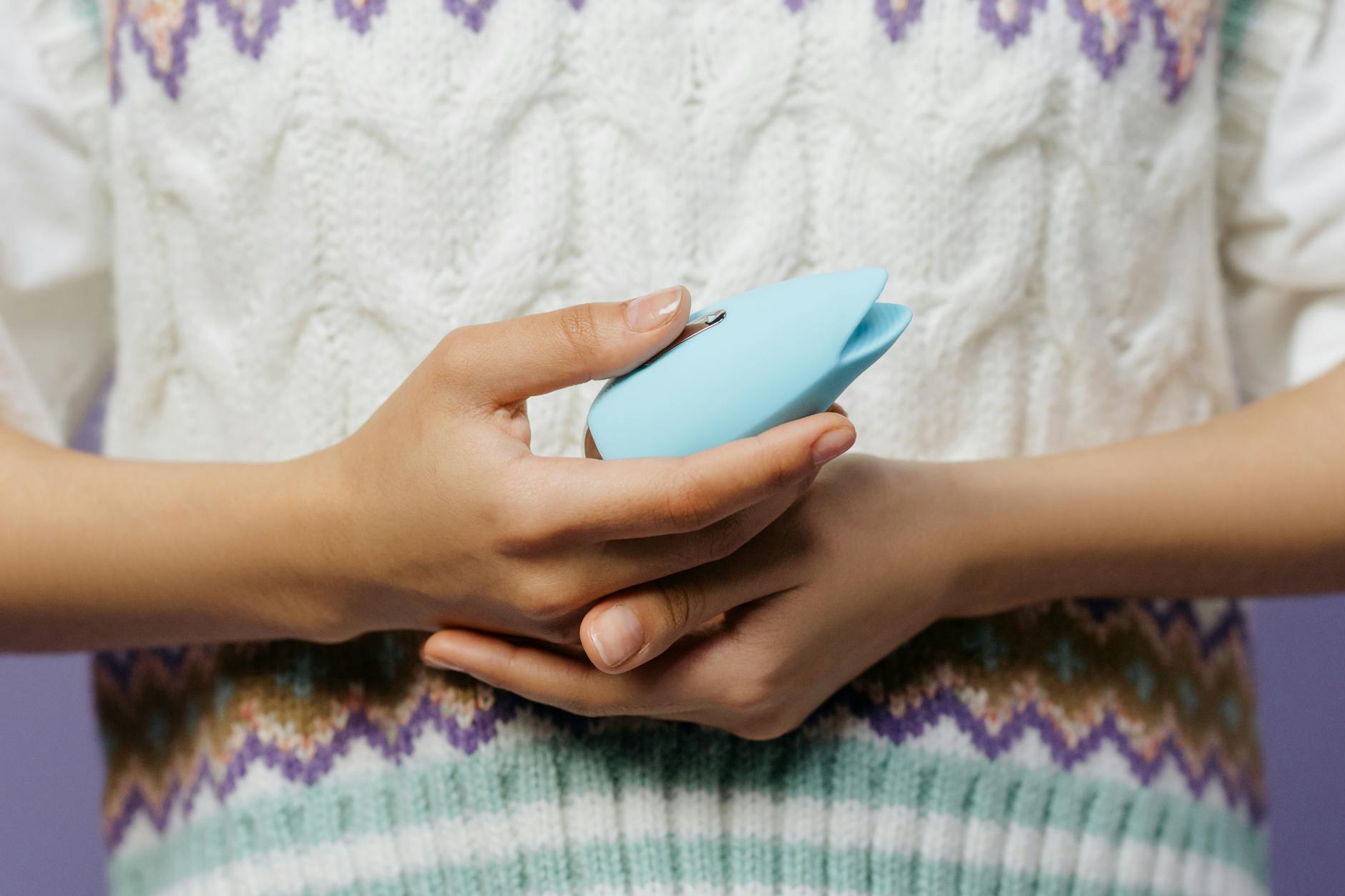
Photo by cottonbro studio on Pexels
The conversation about speed and timeline
Using lemon clitoral vibrators also gives you built-in language for something that's hard to talk about. You can say "I need extra time" without apology when you're literally showing how that works. You're not complaining about your body. You're demonstrating it. That distinction matters for your partner's ego and also for your own sense of agency.
If you usually take 15 or 20 minutes to orgasm and you've been faking it in previous relationships to speed things up, a vibrator lets you stop doing that. You can actually come. Which sounds obvious but is genuinely revolutionary for people who've spent years performing.
When it shifts intimacy in unexpected ways
People with partners often assume toys create distance. In reality, they usually create the opposite. When you're not anxious, you're more present. When you're more present, you can actually connect. The paradox is that adding a tool that's "just for you" actually makes sex more intimate because it's finally based on what's actually happening instead of what should be happening.
You might also find that your partner feels less pressure. If they've been trying to get you to come and failing, a vibrator releases them from an impossible mission. They can focus on their own pleasure again. You can both relax.
The long game
Early-relationship sex has a window. It's not permanent. The performance pressure usually fades after a few months anyway, once you both feel more secure. But why wait six months to start enjoying sex? Why not deal with the anxiety now?
Plus, if you establish early that you use lemon vibrators and that it's normal, you're setting a tone for the whole relationship. You're saying your pleasure is worth the conversation. You're saying your body's timeline is valid. You're saying toys aren't a substitute for your partner. They're a tool that makes everything better.
Most relationships that incorporate vibrators early keep using them. Not because they become a crutch but because they make sex better. And when sex is better, everything else tends to be better too.
FAQ
Will introducing a toy make my new partner think I don't like them?
Unless you frame it as "You can't get me there," most partners interpret it as information, not rejection. Try: "Here's what works for my body. I want to show you." It's actually more attractive than struggling silently.
How do I know if a clitoral vibrator is right for me if I've never used toys?
If new-partner anxiety is stopping you from enjoying sex, a vibrator shifts that dynamic. You don't need past toy experience to benefit. In fact, starting with something like the Lem (a suction vibrator) rather than a traditional vibrator often works better for anxious people because the sensation is more grounding.
What if my partner is uncomfortable with toys?
That's a conversation, not a dead end. Ask what specifically makes them uncomfortable. Is it feeling inadequate? Worried it means something about your relationship? Most discomfort comes from insecurity, not from actual objection to the tool. Sometimes partners warm up after one positive experience.
Does using a vibrator mean I won't be able to come without one?
No. That's a myth. Your body learns what feels good, but it doesn't forget how to respond to other stimulation. Some people use toys sometimes and not other times. Most people find their arousal actually improves overall because they're less anxious.
How do I bring this up without it feeling like I'm criticizing their effort?
Timing and framing matter. Not during or right after sex. Say something like: "I've been thinking about what would help me relax more, and I think introducing a vibrator could be fun for us." Make it a "we" conversation, not a "you're failing" conversation.
Is there a best time in a new relationship to introduce this?
After a few sexual encounters when you've established some comfort but before performance anxiety solidifies into a pattern. Usually that's somewhere between date three and date eight, depending on how often you're seeing each other. The earlier you normalize it, the less weird it feels.
The bottom line
Performance pressure isn't something you just overcome through willpower. Your nervous system is wired to go into protection mode when you feel watched and evaluated. A lemon clitoral vibrator gives you a practical way to interrupt that cycle. It moves you from proving yourself to enjoying yourself. And that shift changes everything about how sex actually feels.
If you're struggling with new-partner anxiety, that's not a personal flaw. It's a normal response to an unusual situation. And it's completely solvable by adding one small tool that takes the guesswork out of the equation. Your pleasure matters. Your timeline matters. Your body's actual needs matter more than any performance.
Ready to shift the dynamic? Start the conversation. Your new relationship will be better for it.